
The Hidden Reality of FGM/C in U.S. Hospitals: How Doctors Are Violating Women’s Rights
Posted: February 11. 2025
by Irene Veronica Nagitta and Rayan Salih
To many in the United States, female genital mutilation/cutting (FGM/C) may seem like a distant topic, affecting only women and girls in unknown cities far away. Yet, the truth is many cases of FGM/C happen locally, in world-renowned hospitals, perpetrated by doctors who went to schools with familiar names. The reality is, that FGM/C is not a distant topic and is a violation of women’s bodies that happens within our own communities and city lines.
While FGM/C is illegal in the U.S., cases continue to surface where medical professionals have performed procedures that can be classified as FGM/C. Many recent articles have made it apparent that FGM/C can happen, and has already happened, to many women across the U.S.. One article even features Brooke Shields, an actress who has enough status or wealth to seemingly protect her from such a violation.
In her memoir “Not Allowed to Get Old”, Shields details a traumatic story involving a non-consensual procedure she received. While being under a knife for a labia reduction surgery the doctor performed a vaginal restorative surgery, also known as a vaginoplasty, without her consent. She was only made aware of her surgery after she regained consciousness, with her male doctor dismissing it as a light-hearted, casual procedure saying that she had been “given a younger vagina”. She hadn’t told her husband for months due to fear and confusion. Years later, when discussing her procedure with NPR, she stated she did not feel safe or secure enough to fight for her bodily autonomy..
Yet, Shields’s case is not an isolated incident. While Shields may be an example of an individual violation, the systemic nature of FGM/C comes to light when discussing cases such as the recent one against Dr. Barry J. Brock, a former obstetrician-gynecologist.
A group of 167 women as of January 2025 filed lawsuits against Dr. Barry Brock, a former OB/GYN at Cedars-Sinai in Beverly Hills, California. The women accuse Cedar-Sinai of a “decades-long cover-up” that enabled Dr. Barry’s exploitation and abuse of patients by ignoring complaints. The women accused the doctor of conducting severe sexual misconduct as they were under his care when he performed invasive exams without using gloves, unnecessary pelvic and breast exams that some women described as rough or even violent, making lewd and sexually explicit comments, and conducting “examinations” without chaperones present or a gown to wear. In addition to these complaints, many of the women also alleged that Dr. Brock performed FGM/C in the form of “the husband stitch” on them without their consent.
The case highlights the rampant prevalence of non-consensual genital procedures on women. It also raises questions about how the U.S. legal and medical ethics systems should better protect women’s bodily autonomy. Such unregulated/unsupervised actions are encouraged by decades of coverup like that of the Cedar-Sinai that enable Doctors’ exploitation and abuse of patients by ignoring complaints leading to doctors performing unnecessary procedures like sutures after childbirth referred to as the “daddy stitch” or “husband stitch”. If institutions like Cedars-Sinai failed to act despite multiple complaints, this signifies how some FGM/C cases have been historically overlooked in medical and legal settings in the U.S.
The allegations of doctors performing unnecessary procedures raise concerns about medicalized FGM/C in the U.S. While FGM/C is often discussed in the context of cultural or religious practices in specific immigrant communities, this case suggests that non-consensual genital alterations are also occurring within mainstream medical settings, often under the guise of medical procedures.
These non-consensual medicalized genital alterations for non-medical reasons or intimate surgeries align with broader definitions of the WHO definition of Type IV FGM/C which includes pricking, piercing, incising, scraping, and cauterization of the female genital area for non-medical purposes. This case serves as a wake-up call that FGM/C is happening in the U.S., and is occurring in the healthcare system.
Expanding the definition of FGM/C to include the husband stitch and nonconsensual genital surgeries for non-medical purposes as forms of FGM/C, can be a powerful tool for policy and legal reform because it challenges the perception that FGM/C is prevalent only in specific communities and calls for a broader examination of how women’s bodily autonomy is routinely violated, even by our trusted doctors in the health care system. All women, regardless of socio-economic class or cultural background, deserve to have the rights to their bodies recognized and respected.
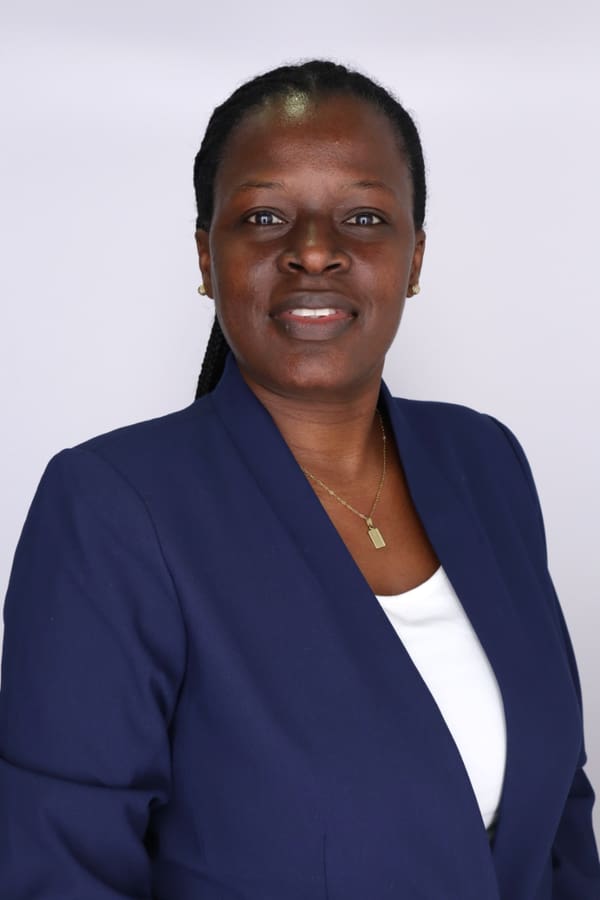

Irene Veronica Nagitta is a Ugandan and US-trained lawyer with 15+ years of experience in diverse areas of law and a deep passion for Justice for women. Irene has worked in international organizations including the United Nations Office of the High Commissioner for Human Rights in Geneva, government Organizations, and the private sector, and operated a law firm.
Rayan Salih is a Sudanese American student pursuing a Bachelor’s in Public Health. She is passionate about bringing awareness to harmful practices toward women, particularly in the healthcare industry. She eventually hopes to become a Physician Assistant, and help empower her patients by bridging the gap between cultural understanding and medical practices.
Both Irene and Rayan are volunteers with The U.S. End FGM/C Network.